Oddworld Inhabitants – 1998 to 2001 (3 years)
- Abe’s Exoddus – Lead QA Tester (1998 – 2000)
- Oddworld Adventures 2 – Associate Designer (2000)
- Unannounced RTS Title “Hand of Odd” – Designer (2001)
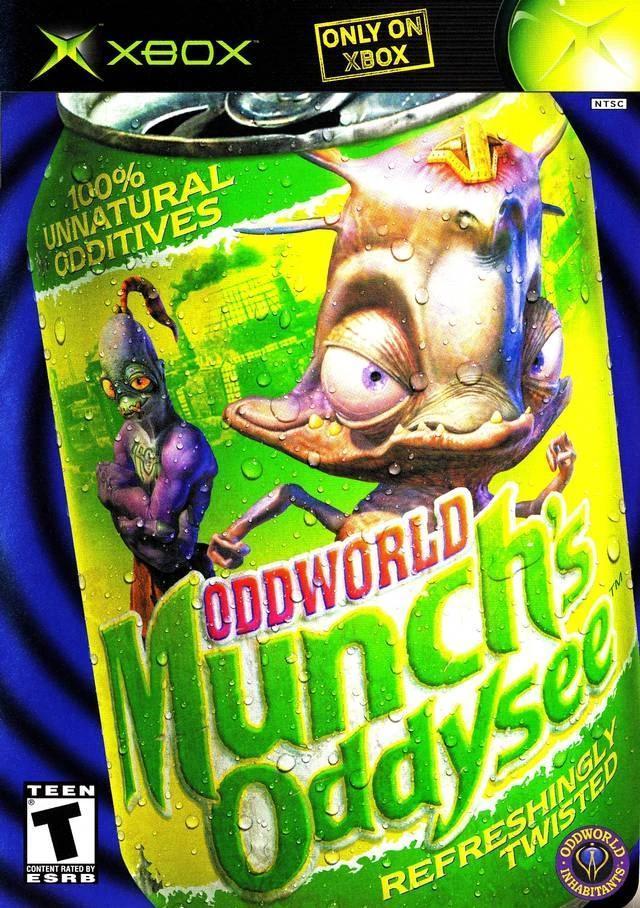
- Munch’s Oddysee – Designer (2001)
My first start in video games was with Oddworld Inhabitants, led by Lorne Lanning and Sherry McKenna. I was working in Irvine, testing memory for a reseller called Advantage Memory. I didn’t make much money, so I also built custom PCs in my kitchen and sold them for a modest profit. When I wasn’t sleeping, I also did tech support at night, doing software installs around Orange County and somehow also finding the time to go to community college. I truly was a Mudokon, and Oddworld saved me. The real credit goes my brother Frank, who was an EP at Oddworld at the time. He knew how hard I worked, saw the connection from testing memory to testing video games and stuck his neck out for me by offering me a job. I wasn’t going to let him down.


Of course, I had a job to do, and I did learn quite a few things while I was there. I was mentored by design legends like Paul O’Connor, Chris Ulm, and last but not least, Jeff Brown. Since I love lists, here are a few things that I learned while I was there:
- Turns out games have a lot of bugs, and it mattered that someone had a handle on how many there were and how severe they were.
- The connection between QA and the entire team is crucial when addressing the quality bar for games. This connection was not one-way, and we were a better team because of this.
- Suggestions are a dime a dozen, but good, thoughtful suggestions can land you a job as a designer.
- People need to take a chance on others and give them a chance. When successful, it is rewarding for everyone, especially the team as a whole.
Here are some skills I picked up, on the job:
- The studio didn’t have a bug database, so I built one. For the life of me, I can’t remember the name of the software I used, but man, I spent a couple months and lots of late nights putting a DB together. It kicked out reports, had bug entry, a web interface, and for the most part worked!
- We hired 7-8 people to test the game, and I learned to be their lead on the job. We just divided up the work as a team and busted our butts. Everyone owned something in the game and that made everyone care. There wasn’t a lot of ego, and we had a lot of fun breaking the game, especially the quick save, but that’s like a whole story in itself. Thankfully we got the job done on Exoddus, because sometime in the middle of production, we lost our test support from the external test group and had to do everything in house.
- Gemini was a 2D grid editor for game object placement, floor and wall collision. Its perspective was from the side. It was how the designers crafted Abe’s Oddysee, Abe’s Exoddus, and Oddworld Adventures 2. I learned to use it and appreciate how important it is to have good, reliable tools to make a game.
- Unreal was the first 3D engine adopted by the studio, and we used it to make Munch’s Oddysee. I also used it to make prototypes for a RTS prototype that we never released before moving over to Munch. Unreal turned out to be a pretty big deal and it’s cool to think that I used version 1.0 – what are we on now 5.6?
- One of the prototypes I did was to create a suite of 3D modular world tiles that could be assembled via a text file. I built/exported the world piece from Unreal, and assembled those parts into a level via naming convention and (x, y, z) coordinates. The perspective was top down, versus on the side, almost like someone hacked Gemini to do this, but still to this day I’m unsure. Either way, it worked! We had a pretty large outdoor worlds built in a “semi-procedural” manner (even though it was hand authored at the time).
 Mark Simon